
The Ultimate Guide to the Top 10 Rice Cookers
As an Amazon Associate I earn from qualifying purchases.
A rice cooker is doing one job better than a covered saucepan: heating, sensing, and then holding rice without a scorched bottom. Fuzzy-logic (Micom) cookers adjust time and temperature. Pressure and induction models go further, at more money and more menu complexity. Cup sizes on Japanese and Korean cookers are usually 180 ml rice cups, not U.S. 240 ml cups—always use the cup in the box. This guide covers ten rice cookers currently listed on Amazon, from a 3-cup Toshiba mini to a 6-quart Instant Pot that also pressure-cooks. No invented prices. Confirm capacity and pot coating on the listing you open.
1. Zojirushi NS-ZCC10 Neuro Fuzzy Rice Cooker (Amazon)
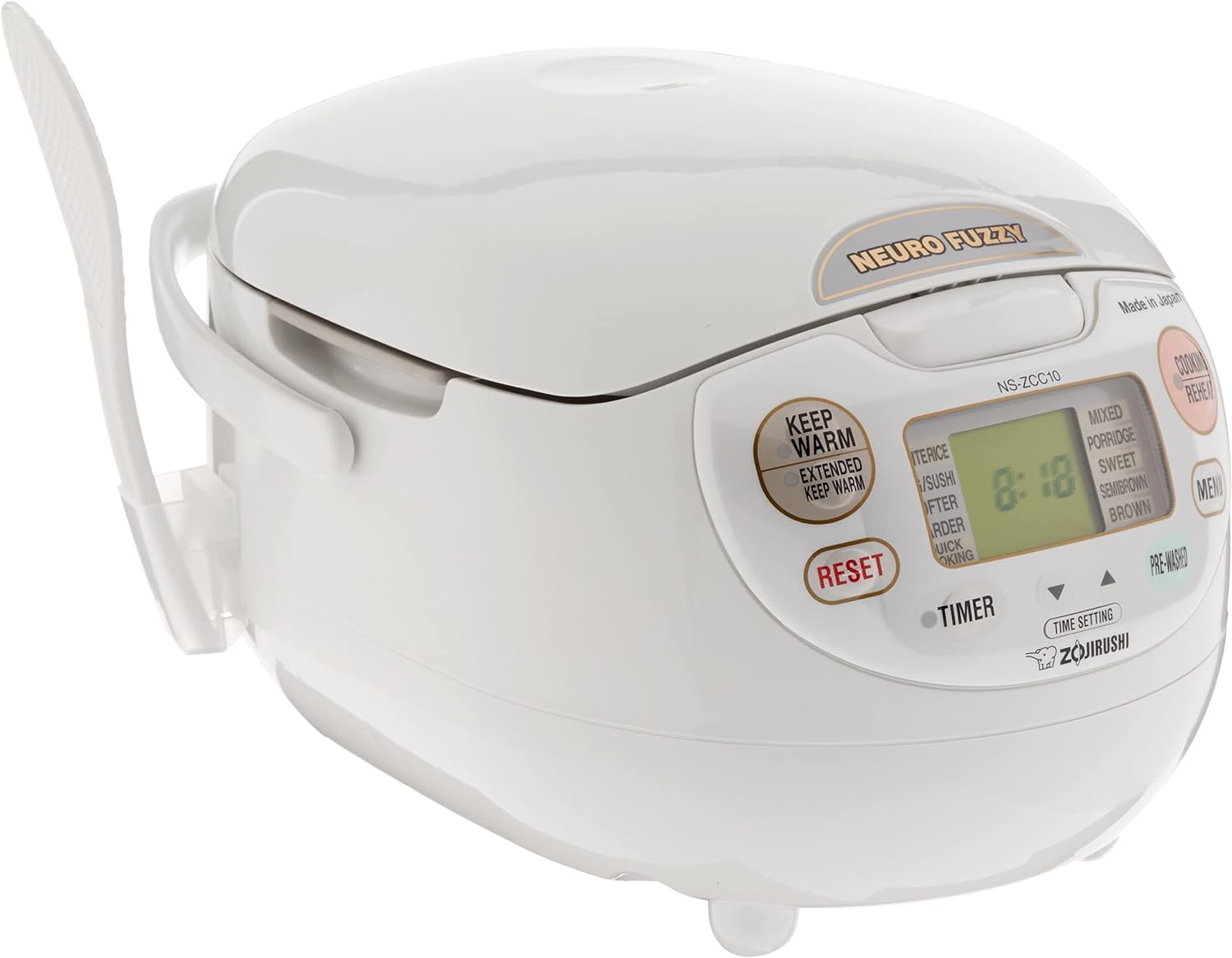
- Key Features: 5.5-cup uncooked Neuro Fuzzy cooker, spherical pan, white/sushi/brown/porridge/sweet/mixed/quick menus, delay timer, retractable cord, keep-warm
- Pros: Fuzzy logic adjusts heat instead of a single on/off thermostat; 5.5-cup size fits most households; retractable cord and keep-warm are daily-use details
- Cons: White rice cycles are slower than a cheap one-button cooker; 5.5 cups uncooked is too small for a huge party pot; premium versus Aroma or Black+Decker
- Description: The NS-ZCC10 is Zojirushi’s long-running Neuro Fuzzy 5.5-cup cooker. It is made to cook rice as a dedicated job: regular or sushi white rice, brown, porridge, and a quick cycle, then hold it. Capacity is Japanese rice-cooker cups (180 ml), not U.S. measuring cups—read the included cup. Choose it when rice is a several-times-a-week staple.
2. Zojirushi NS-TSC10 Micom Rice Cooker (Amazon)
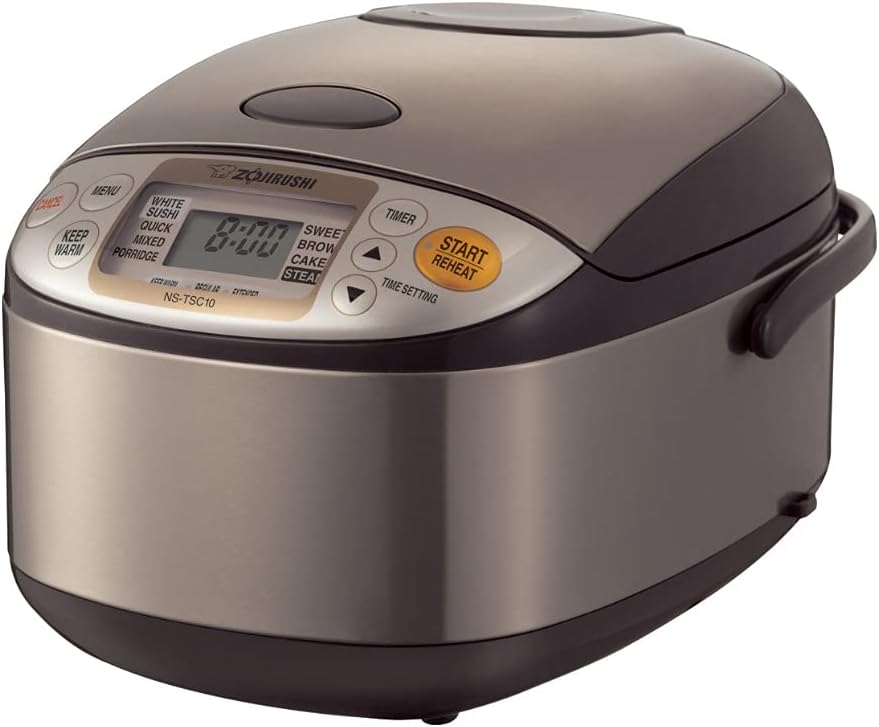
- Key Features: 5.5-cup Micom fuzzy-logic cooker, 1.0-liter, stainless exterior, white/sushi, brown, steam, cake, delay timer, extended keep-warm, retractable cord
- Pros: Steam basket and cake setting add jobs beyond a pot of white rice; stainless shell wipes down easily; same 5.5-cup family size as the Neuro Fuzzy
- Cons: Still a dedicated cooker taking counter space; Micom is excellent, not induction-pressure; steam/cake extras mean more parts to wash
- Description: The NS-TSC10 is Zojirushi’s stainless Micom 5.5-cup cooker. Fuzzy logic handles white, brown, and mixed rice; the steam and cake menus are why people pick TSC over a simpler Neuro Fuzzy if they also want a small steamer. Use the rice cup that ships in the box, not a Pyrex 8-ounce cup, or you will overfill it.
3. Tiger JBV-A10U 5.5-Cup Micom Rice Cooker (Amazon)
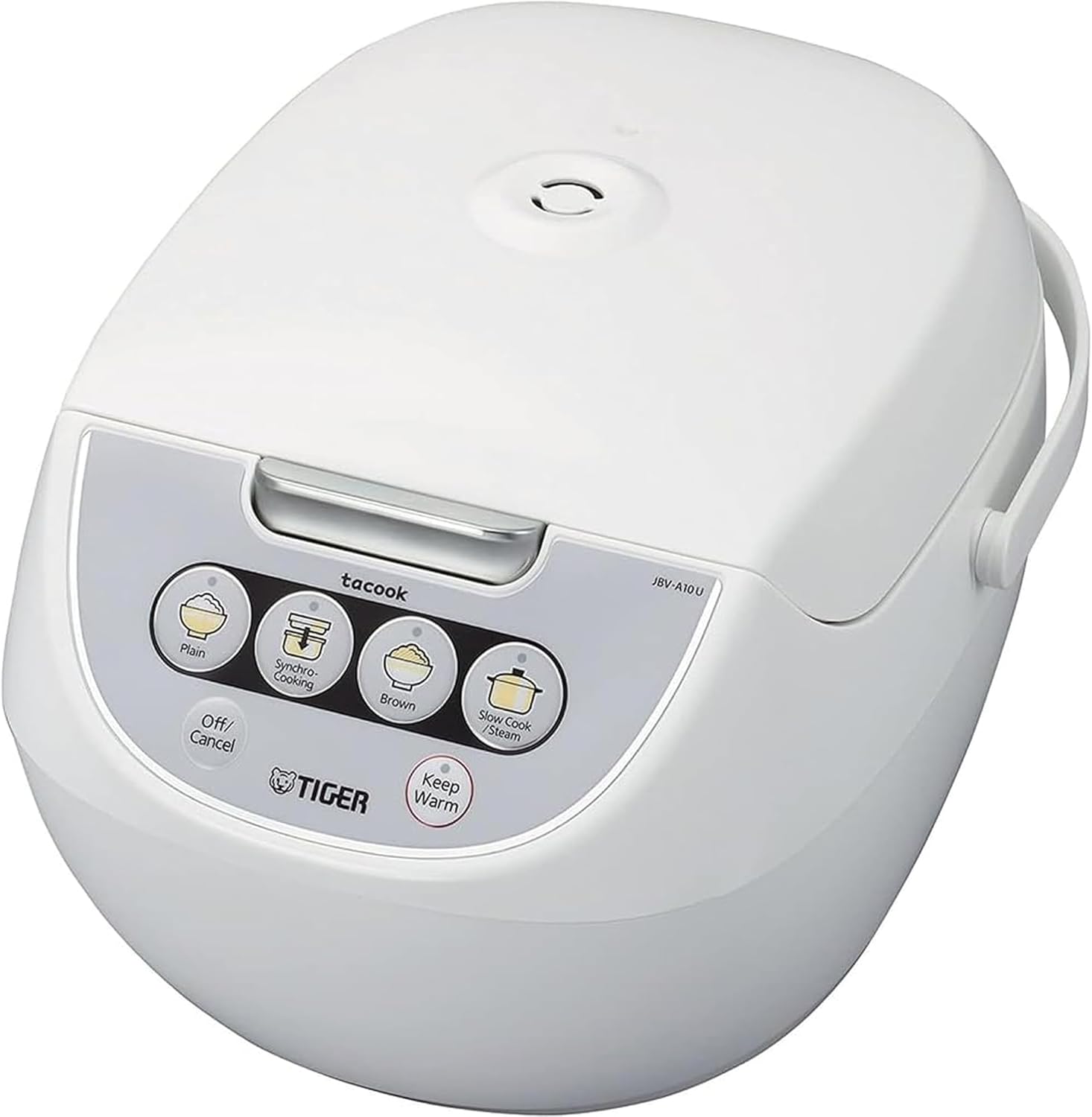
- Key Features: 5.5-cup Micom cooker, Tacook synchro-cooking plate, white rice and brown settings, keep-warm, folding handle on typical JBV units
- Pros: Tacook lets you steam a side while rice cooks below; 5.5-cup size matches the common Zojirushi class; generally faster cycles than Neuro Fuzzy white rice
- Cons: Inner lid is less convenient to remove than Zojirushi’s on some Tiger models; fewer gourmet rice menus than Neuro Fuzzy; Tacook portions are a small tray, not a second pot
- Description: Tiger’s JBV-A10U is a 5.5-cup Micom cooker with the Tacook plate: rice in the pan, a shallow dish of protein or vegetables steaming above it. That is the reason to pick Tiger over a basic digital cooker. It will not match a pressure IH Cuckoo for Korean-style rice, but it is a strong weekday machine for rice plus a simple side.
4. Toshiba OriginTaste 5.5-Cup Fuzzy Logic Rice Cooker (Amazon)
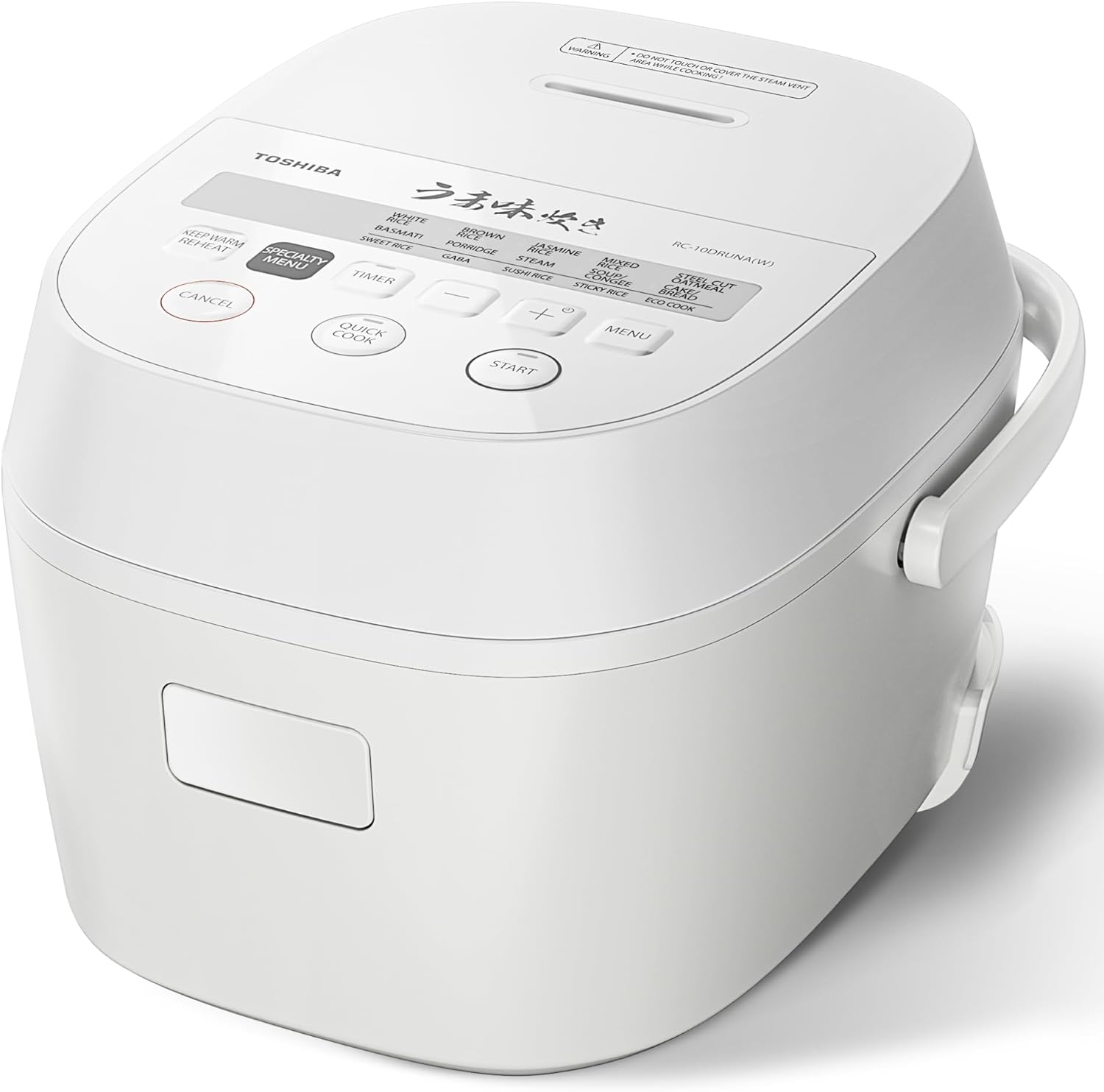
- Key Features: 5.5-cup uncooked fuzzy-logic cooker, 15-in-1 functions, digital display, delay timer, keep-warm, nonstick inner pot
- Pros: More grain and multi-cook programs than a two-button budget cooker; 5.5-cup uncooked size is the family sweet spot; delay timer helps weeknight timing
- Cons: Nonstick pots wear if you scoop with metal; 15 programs can be more than you use; not a pressure cooker
- Description: Toshiba’s OriginTaste 5.5-cup cooker is a fuzzy-logic machine with a long function list—rice types plus extras such as keep-warm and delay. It is the mid-price Japanese-branded alternative when Zojirushi’s Neuro Fuzzy feels like too much money and a $30 Aroma feels too basic. Measure with the included cup.
5. AROMA Digital 4-Cup Rice Cooker and Steamer (Amazon)
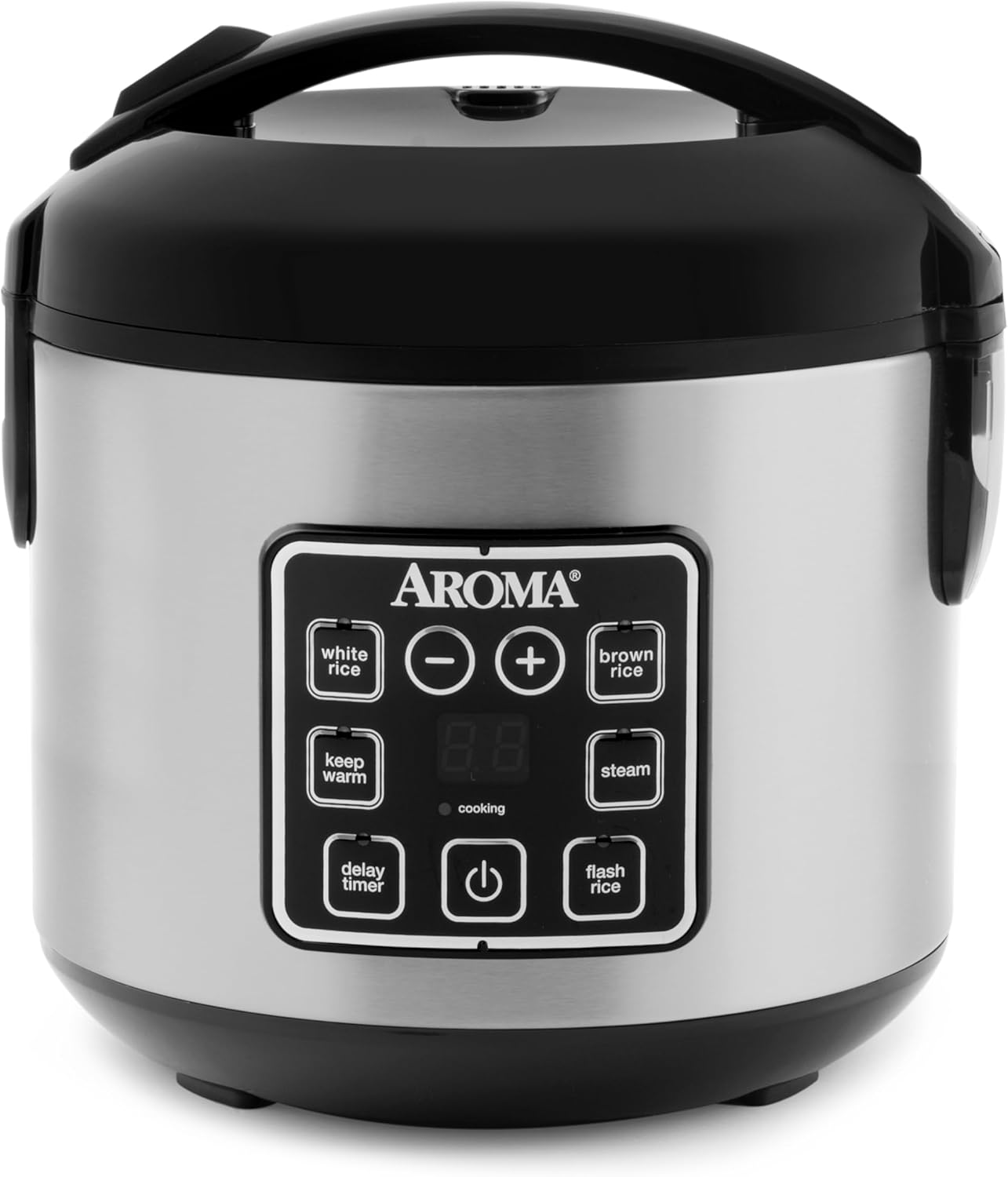
- Key Features: 4-cup uncooked / 8-cup cooked digital cooker, 2-quart, steamer, grain/multicooker programs, stainless-look body on this listing
- Pros: Smaller uncooked capacity suits couples; steamer insert is included on this digital Aroma; price is usually well below Zojirushi
- Cons: 4 cups uncooked is tight for a family dinner; digital budget cookers are less consistent on brown rice; the 2-quart pot is not a pressure cooker
- Description: Aroma’s digital 4-cup (uncooked) cooker is the starter machine: white and brown programs, a steam tray, and an 8-cup cooked yield when full. It is the right size for one to three people. If you cook rice for a crowd every night, step up to a 5.5- or 10-cup Japanese cooker instead of overfilling this pot.
6. CUCKOO Micom 6-Cup Uncooked Rice Cooker (Amazon)
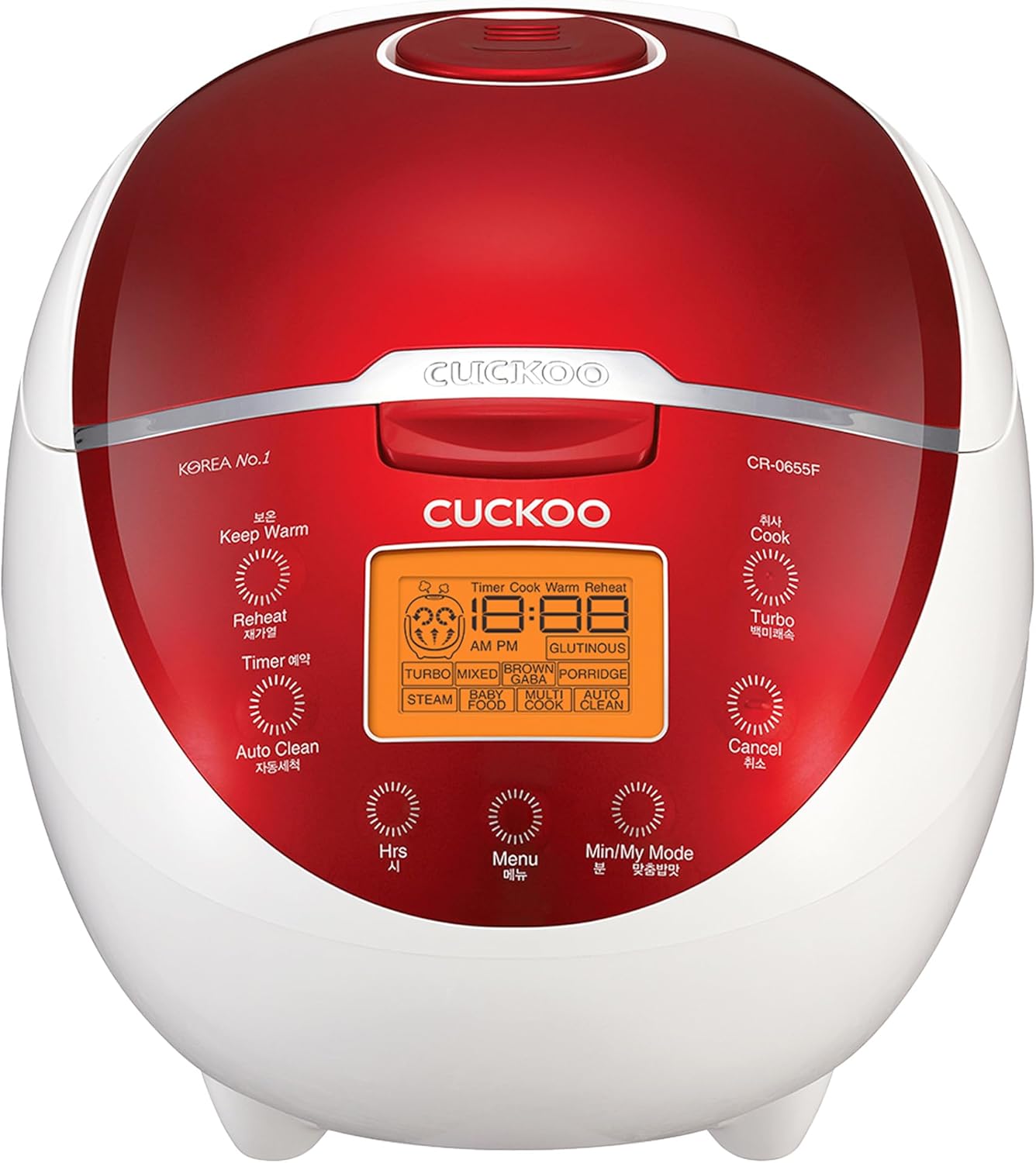
- Key Features: 6-cup uncooked / 12-cup cooked Micom fuzzy-logic cooker, delay timer, keep-warm, vegetable steamer accessory on this listing
- Pros: Larger than the 5.5-cup Zojirushi class when you feed more people; fuzzy logic beats a plain thermostat cooker; keep-warm and delay cover leftovers and timing
- Cons: A 12-cup cooked cooker is bulky on a small counter; Micom is not the same as Cuckoo’s high-pressure IH flagships; voice or menu language varies by Cuckoo model—read the listing
- Description: This Cuckoo Micom cooker is the larger everyday Korean-branded option: 6 cups uncooked, 12 cooked, fuzzy logic, delay, and keep-warm. It is not Cuckoo’s premium pressure IH unit. Buy it when you want more capacity than a 5.5-cup Zojirushi without jumping to a 10-cup commercial-style cooker.
7. Hamilton Beach Digital Rice Cooker (8 Cups Cooked) (Amazon)
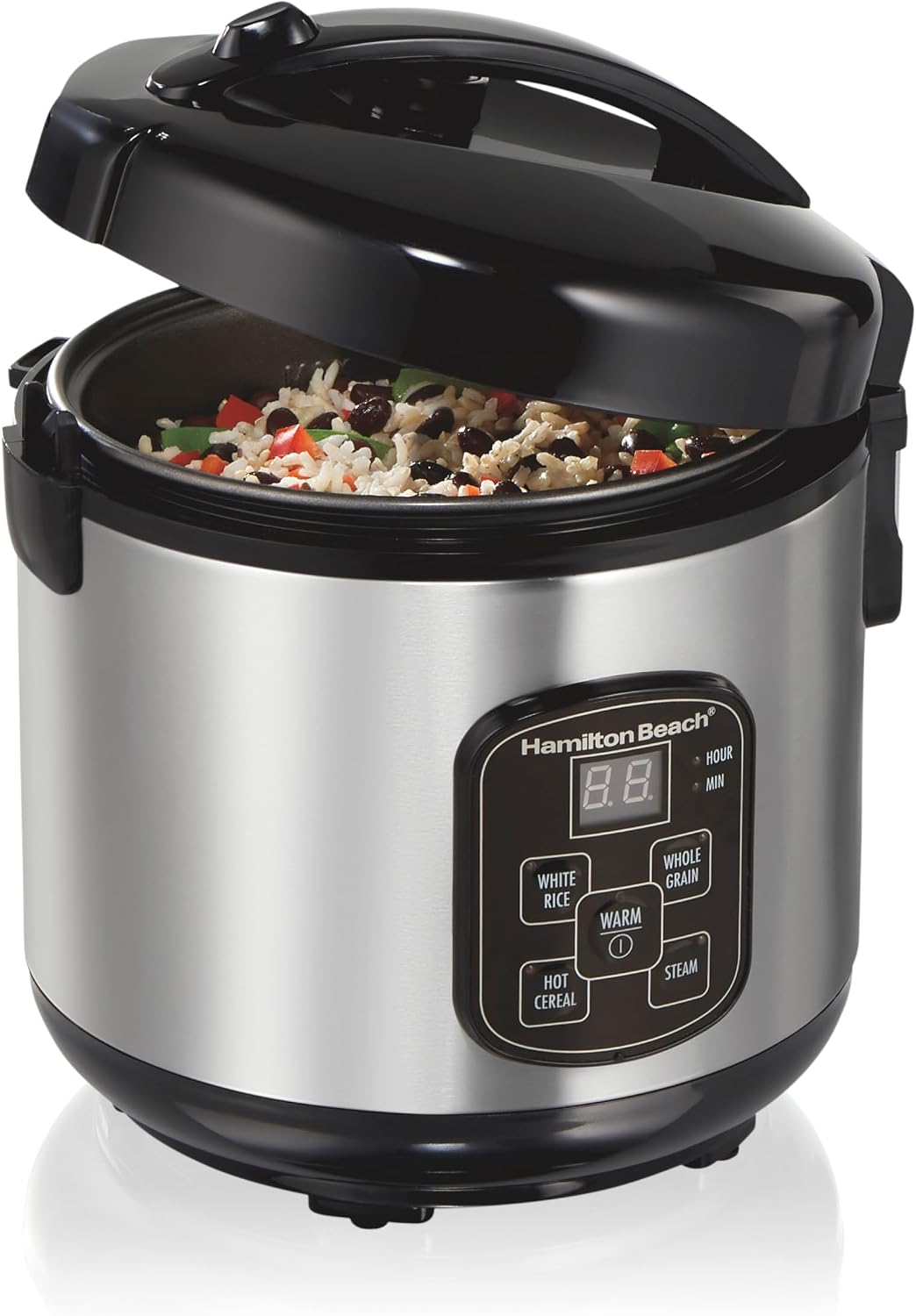
- Key Features: Digital programmable cooker, 8 cups cooked / 4 cups uncooked, steam and rinse basket, one-pot rice and steamer layout
- Pros: Familiar American-brand controls; steam basket doubles as a rinse colander; 4-cup uncooked size is honest for a couple or small family
- Cons: Not fuzzy-logic Japanese rice in the Zojirushi sense; 8 cups cooked is smaller than the name sounds if you think in party trays; nonstick needs plastic or wood utensils
- Description: Hamilton Beach’s digital 8-cup-cooked cooker is a straightforward steamer-and-rice pot with a rinse/steam basket. Capacity is 4 cups uncooked—enough for most weeknights, not a 20-person potluck. Pick it when you want rice plus steamed vegetables in one appliance and do not want to learn a Cuckoo menu.
8. COSORI 10-Cup Fuzzy Logic Rice Cooker (Amazon)
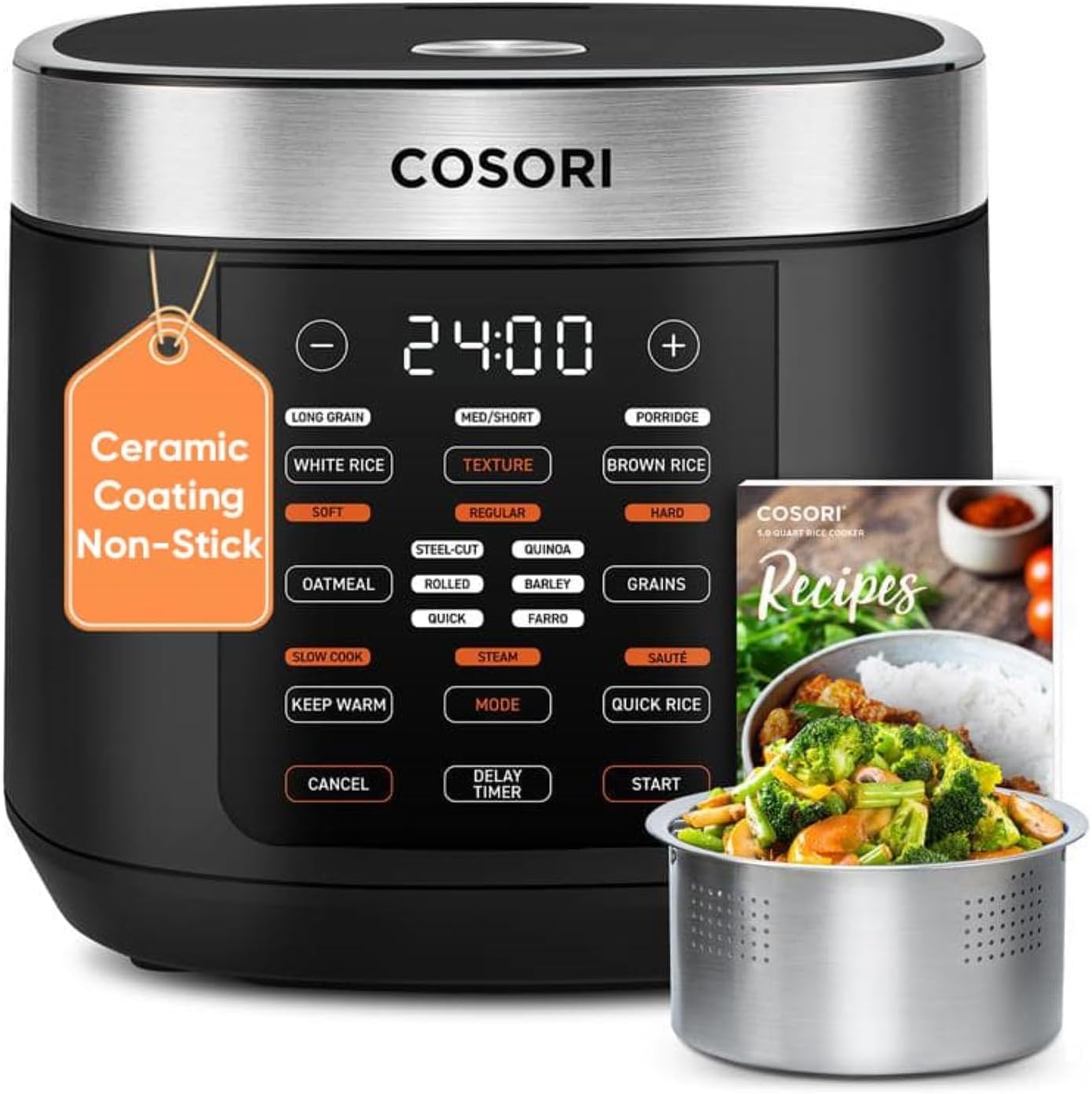
- Key Features: 10-cup (cooked-class) fuzzy-logic cooker, ceramic-coated inner pot, 18-in-1 programs, digital controls
- Pros: Ceramic coating is the reason people shop this COSORI versus a plain PTFE pot; 18 programs cover rice, grains, and extras; fuzzy logic is a step above one-button cookers
- Cons: Confirm whether “10 cup” on the listing is cooked or uncooked before you buy; more programs mean more buttons to ignore; ceramic coatings still scratch if you dig with metal
- Description: COSORI’s fuzzy-logic rice cooker with a ceramic-coated pot is the feature-heavy mid-brand cooker: lots of grain programs and a pot marketed as non-PTFE ceramic. Read the cup count on the Amazon title—this ASIN is sold as a 10-cup cooker with 18-in-1 functions. It is a dedicated rice cooker, not an Instant Pot.
9. Instant Pot Duo 6 Quart 7-in-1 (Amazon)
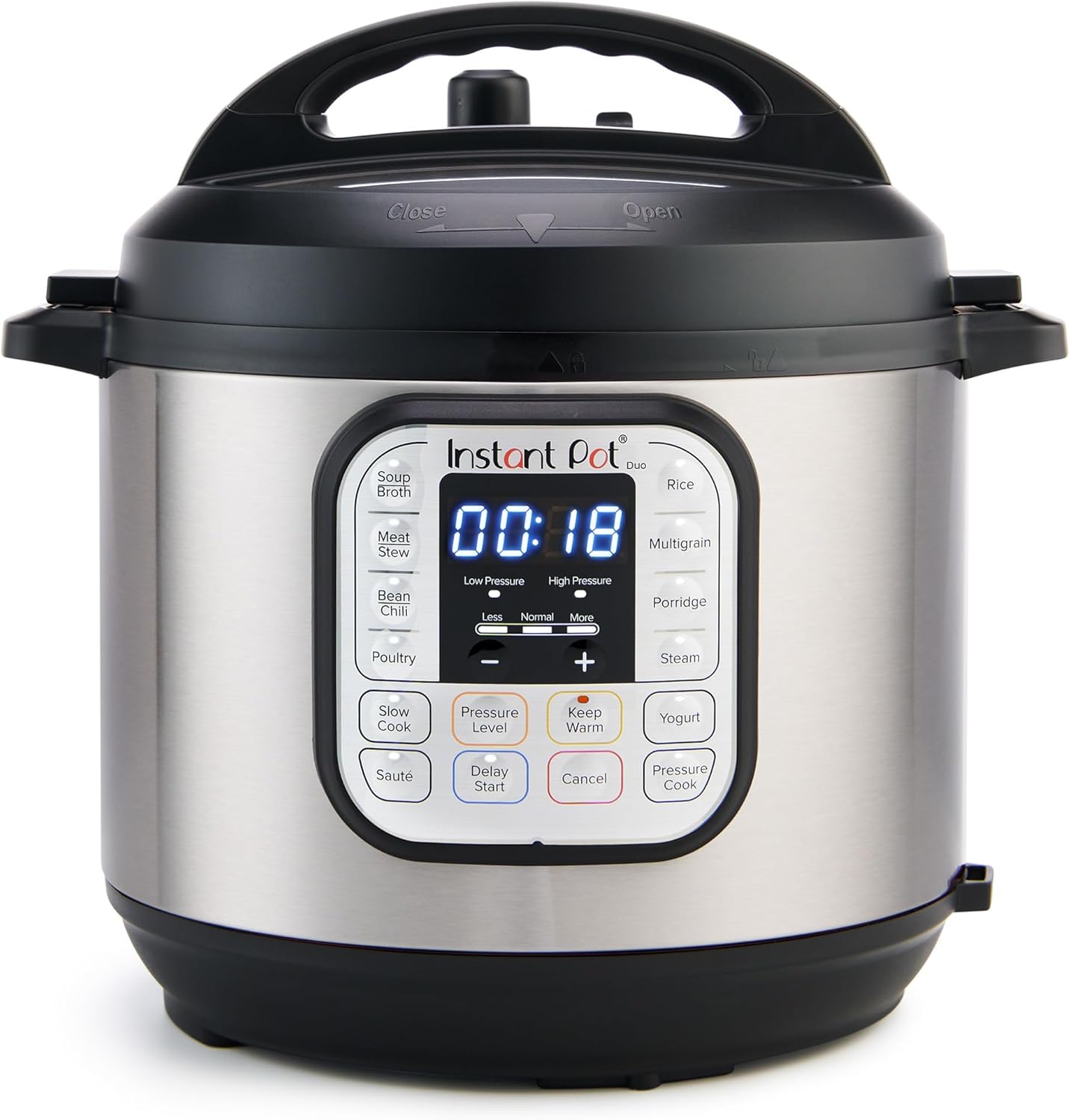
- Key Features: 6-quart electric pressure cooker, 7-in-1: pressure, slow cook, rice, steam, sauté, yogurt, keep-warm, stainless inner pot
- Pros: One appliance for rice plus beans, stock, and weeknight stews; stainless pot can go under a broiler in many kitchens; 6 quarts feeds a household
- Cons: Pressure-cooked rice is a different texture than a dedicated Micom cooker; learning the sealing ring and steam release is extra; it is large if you only wanted rice
- Description: The Instant Pot Duo 6-quart is on this rice list because its rice program is how many U.S. kitchens actually cook rice. It is a pressure multicooker first. If perfect sushi rice is the only job, a Zojirushi or Tiger will beat it. If you also want beans, shredded chicken, and yogurt in the same footprint, the Duo is the versatile pick.
10. Toshiba Mini 3-Cup Fuzzy Logic Rice Cooker (Amazon)
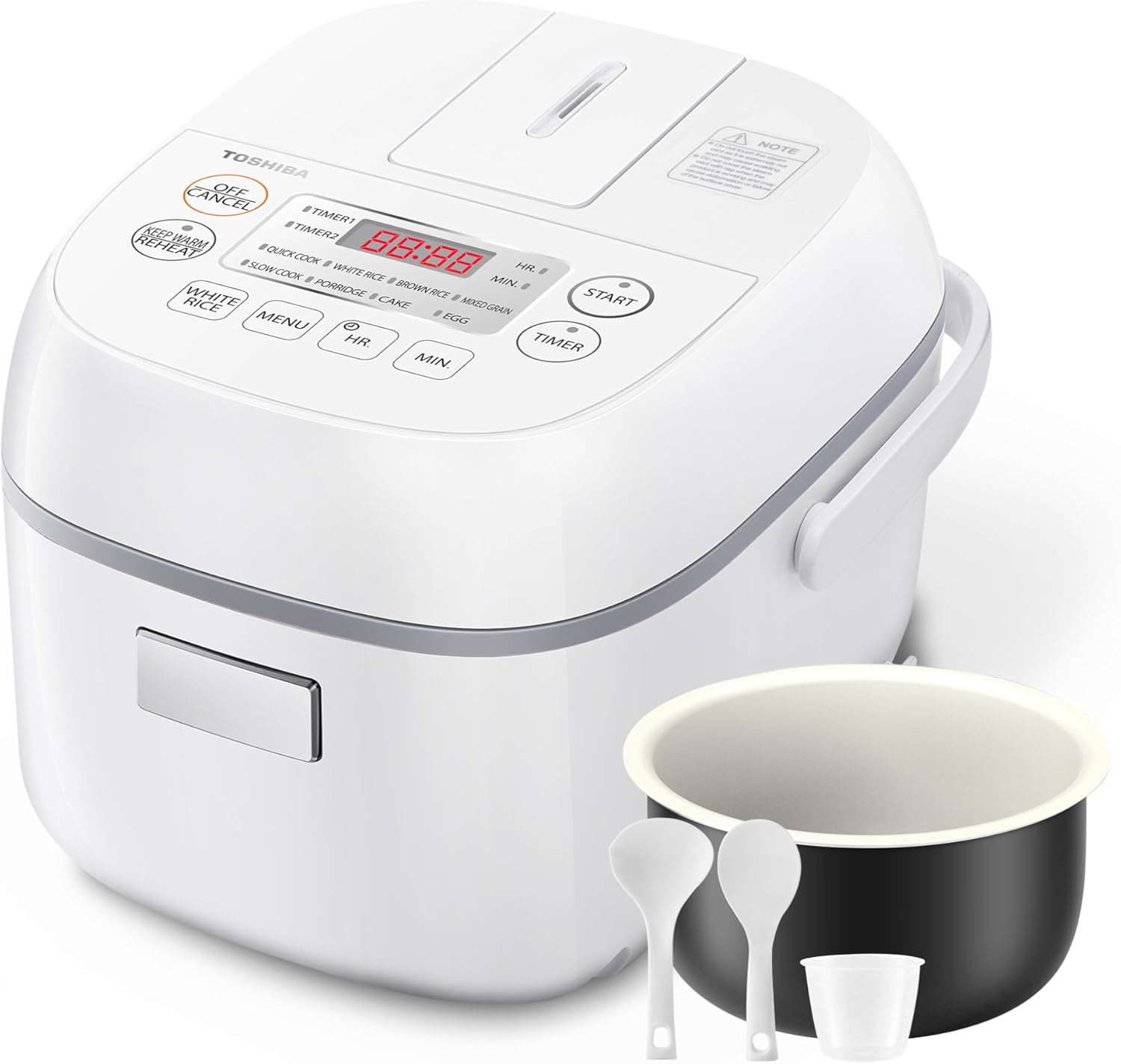
- Key Features: 3-cup uncooked mini cooker, 1–3 people, steamer and warmer, fuzzy logic, one-touch cooking, 24-hour delay timer
- Pros: Takes far less space than a 5.5-cup cooker; fuzzy logic in a small pot is better than a 1-button mini; delay timer helps a solo weeknight
- Cons: 3 cups uncooked will not feed a family dinner; mini pots still need washing after every batch; one-touch simplicity means fewer specialty rice menus
- Description: Toshiba’s 3-cup mini is the apartment and solo-cooker pick: fuzzy logic, a steamer/warmer, and a 24-hour delay in a footprint that fits a dorm shelf. Do not buy it as a party cooker. Buy it if a 5.5-cup Zojirushi would sit two-thirds empty every night.
Rice cookers earn their counter space only if you will use them several times a week. Pick a cup size that matches your household, then decide if you want simple digital steam-and-rice, Japanese Micom, Korean capacity, or a 6-quart multicooker. The ten machines above are live Amazon listings; read the current title for cup count and pot coating before you click buy.
Rice Cooker Buying Guide and FAQs
How many cups do I actually need?
Manufacturers quote uncooked cups. A 3-cup mini fits one to three people. A 5.5-cup Zojirushi or Tiger is the usual family size. A 6-cup uncooked Cuckoo or a 6-quart Instant Pot feeds a crowd. Do not buy a huge cooker to sit two-thirds empty; small batches cook less evenly in an oversized pot. Measure with the included rice cup.
What is fuzzy logic versus a cheap one-button cooker?
A basic cooker is a thermostat: heat until the water is gone, then switch to warm. Fuzzy-logic (Micom) cookers sample temperature and tweak the cycle for white, brown, or mixed rice. That is why Zojirushi, Tiger, Toshiba, Cuckoo, and COSORI fuzzy models cost more than a $25 one-switch pot. Pressure IH cookers are another step up and are not required for good weeknight rice.
Can I cook brown rice, quinoa, or steel-cut oats?
Most Micom cookers have a brown-rice cycle that uses more water time. Grain and porridge menus vary—read the chart in the manual. Instant Pot rice and multigrain programs are a different, pressure-based texture. If brown rice is half your diet, a dedicated brown setting (Zojirushi, Tiger, Toshiba, Cuckoo) matters more than a steamer basket.
Is the Instant Pot a real rice cooker?
It is a pressure multicooker with a rice program. It makes acceptable rice and a lot of other dinners. Dedicated Micom cookers generally produce more consistent steamed rice and keep it better on warm. Buy Instant Pot if you want one pot for rice, beans, and stews. Buy Zojirushi or Tiger if rice is the appliance’s whole job.
How do I keep the inner pot from scratching?
Use the plastic or wooden paddle that comes in the box. Do not soak a hot nonstick or ceramic pot under cold water. Hand-wash if the manual says so. Replacement pots exist for popular Zojirushi and Instant Pot models—match the exact model number. A scratched pot is a reason to replace the insert, not to metal-scour it.